
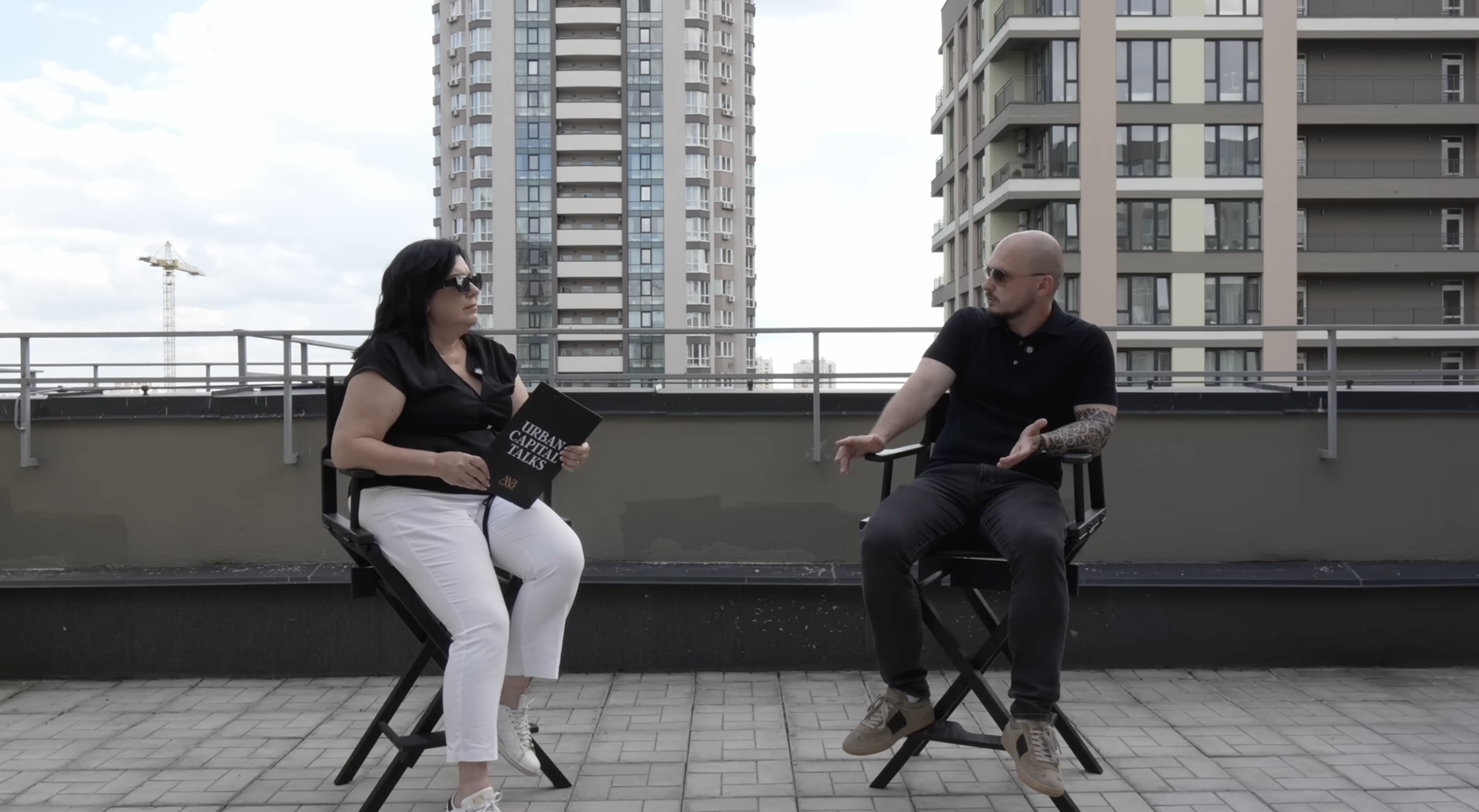
Mykola Bumazhny, a leading expert at LAD, spoke with the editorial team of Urban Capital Talks—an original project by the developer “Alliance Novobud” dedicated to urban development, architecture, real estate, services, and current market trends.
In the 7th episode, the expert and the editorial team raised relevant issues, which we will discuss in greater detail in this article.
Over the past five years, we have seen significant changes in the behavior of apartment owners. How exactly has the approach to choosing a home in Ukraine changed?
Priorities have been changed dramatically. Whereas location, the project’s visual concept, the neighborhood’s infrastructure, and price per square meter used to be the key factors, the focus has now shifted entirely to safety and autonomy.
Today’s Ukrainian investors are primarily interested in the availability and condition of shelters in a building or in its immediate vicinity. This has given rise to entirely new, stringent demands on the new-construction market.
A successful project isn’t just about square meters—it’s a residential complex that:
– It is energy-independent and features modern autonomous power supply systems (generators, solar power stations, energy storage systems).
– It ensures the uninterrupted operation of critical infrastructure: elevators, water supply pumping stations, and heating systems in common areas.
– Guarantees the consistent provision of utility services regardless of external factors.
– Relies on the developer’s reliability and absolute transparency in ongoing relationships with residents and management companies.
Can a developer’s in-house management company fully meet residents’ high expectations in today’s reality?
It absolutely can—but on one condition: the developer must clearly understand that managing residential properties after they’re commissioned is an entirely different business, requiring different skills, a different level of operational stability, and a tremendous amount of responsibility.
It’s essential to understand the difference between selling a concrete shell and creating high-quality, long-term service. A great example is KAN Development (with such landmark projects as the “Faina Town,” “Respublika,” and “Comfort Town” residential complexes, as well as the innovative “UNIT.Home”).
They have assembled an exceptionally high-caliber professional team. I am personally acquainted with CEO Olena Shamal, who leads this division at KAN. They operate in a highly systematic manner, building a unified ecosystem from the foundation pit to after-sales service. However, unfortunately, such a high standard remains, for now, more of an exception to the general rule in the market than the norm for everyone.
What are the key steps Ukrainians need to take to prepare their apartment buildings for a difficult winter during the war?
In this regard, we must clearly distinguish between two completely different categories: old Soviet-era buildings and modern residential buildings.
When we talk about equipping a building with energy-independent systems, there are numerous technical parameters to consider:
– The number of stories in the building.
– The presence and type of underground parking.
– The design features of the elevator system.
– The presence of an individual heating unit (ITP) or a rooftop/on-site boiler room.
All of these factors directly influence the amount of energy resources that will need to be set aside to ensure the building’s stable operation.
Where to find funding and support?
If you want to get your home ready for the heating season right now, follow these steps:
Municipal programs (city grants and co-funding):
What to do: Look for current programs on your city’s official website under the categories of energy independence and housing and utilities modernization.
Key features: These programs are often underreported in the media, but they are actually funded through local budgets, supported by relevant city departments, and characterized by a fast implementation and approval process.
Government grant programs:
What to do: Contact the Energy Efficiency Fund (in particular, their flagship programs such as “EnergoDom”).
Key features: The Fund provides grants that cover up to 70–80% of the cost of materials and construction work. Of course, the application approval process involves more red tape and takes longer, but this is the best way to comprehensively and reliably provide your home with heat and light without spending a fortune.
Additionally, LAD, together with its partner Eurodim, has created an entire ecosystem for providing investment funds for renovation and thermal modernization to reduce energy consumption in homes.
